

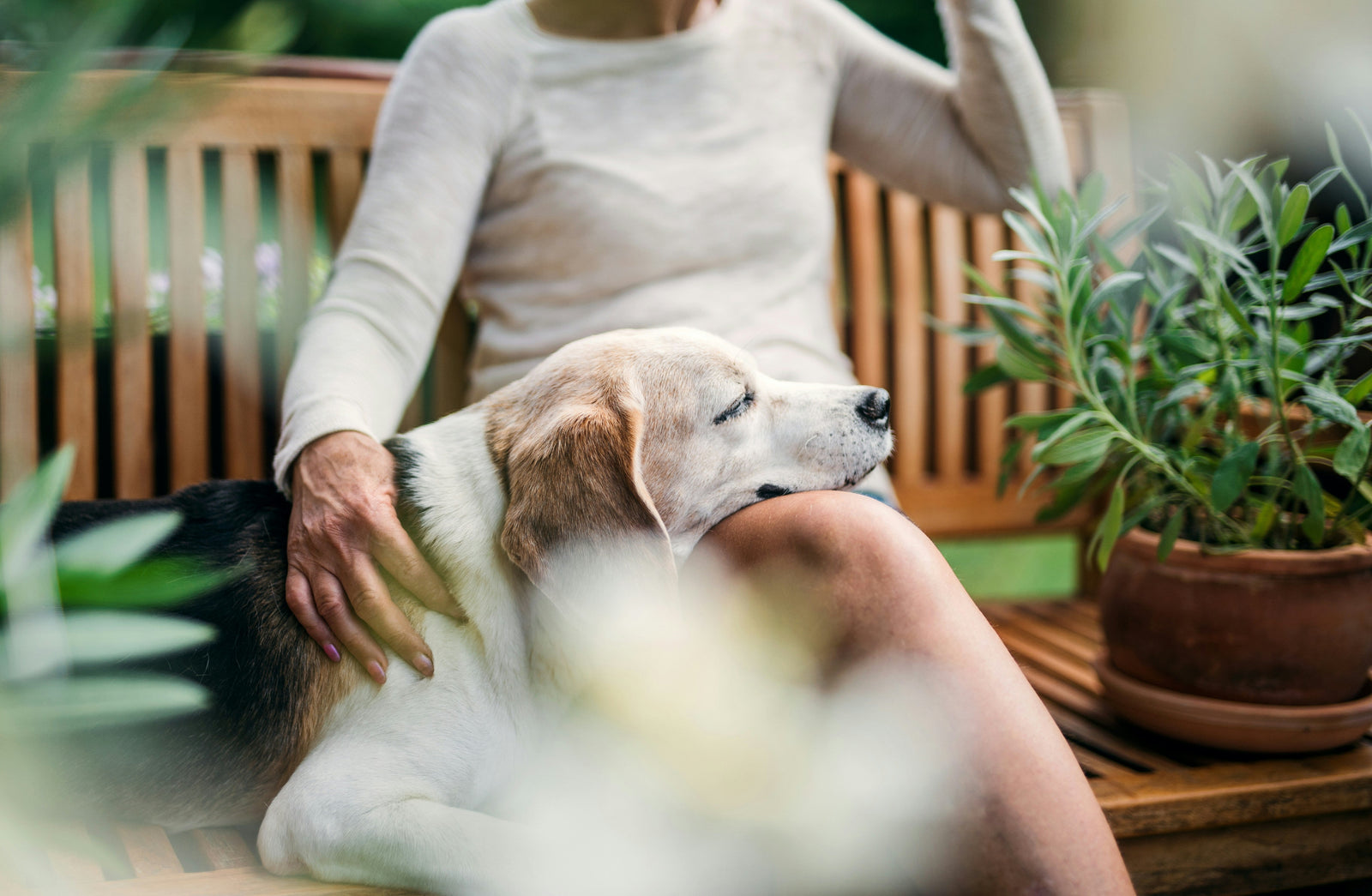

One day you look down and realize the puppy who once bounded up stairs now pauses halfway. Others take a little longer to rise from their bed to greet you at the door when you get home from work. As dogs age, their needs shift in ways that are easy to miss. They may tire more quickly, hesitate at the stairs, or carry a few extra pounds. These changes aren’t just quirks of getting older—they’re signs that the body is slowing down. The good news? With a few thoughtful adjustments, owners can help senior dogs stay healthier, happier, and more mobile.
Why Body Condition Matters Most
One of the clearest lessons in canine aging comes from a long-term study of Labrador Retrievers. Dogs kept lean by eating 25% fewer calories than their littermates lived almost two years longer and developed chronic diseases later in life. That’s a powerful reminder that maintaining a healthy weight is one of the simplest, most effective things you can do for your older dog.
As metabolism slows with age, keeping meals measured and treats limited makes a big difference. A healthy weight reduces stress on joints, improves energy, and helps protect against diabetes-like conditions.
Feeding for the Senior Years
Senior dogs don’t necessarily need “senior food,” but many do benefit from diets designed with aging in mind. These formulas often have fewer calories, higher-quality protein, and added fiber to support digestion. Some include extras like omega-3 fatty acids for joint health or antioxidants for immune support.
Switching diets should be gradual, and not every dog needs a prescription plan. But every senior dog does need portion control. Regularly checking that you can feel ribs without pressing too hard—and seeing a defined waistline from above—are simple at-home tools to keep weight in check.
Exercise and Mobility
Older dogs still need exercise, but the type and amount may need adjusting. Long, strenuous runs may be off the table, but shorter, more frequent walks can keep joints lubricated and muscles strong. Swimming or gentle play are excellent low-impact options.
At home, simple changes like adding non-slip rugs, ramps for beds or cars, and orthopedic beds can make life easier. If you notice stiffness, limping, or reluctance to move, talk to your vet—pain management and physical therapy can extend your dog’s active years.
Comfort at Home
Senior dogs spend more time resting, so comfort matters. A supportive bed helps prevent pressure sores and joint pain. Keeping food and water bowls easily accessible—ideally on one floor—reduces the need for strenuous climbing. Consistent lighting and furniture placement help dogs with fading eyesight or memory avoid confusion.
Routine is also important. Predictable meal times, walks, and bedtime help older dogs feel secure and lower stress.
Health Monitoring
Veterinarians recommend senior dogs come in at least twice a year, since problems can develop quickly. Bloodwork, urinalysis, and dental checks can catch disease early, when it’s easier to manage. At home, owners should watch for increased thirst, changes in appetite, sudden weight loss or gain, coughing, or difficulty getting up. These small shifts often signal bigger health issues.
Quick Senior Dog Checklist
-
Daily: Measured meals, gentle exercise, enrichment (like puzzle toys or training), and access to a supportive resting spot.
-
Monthly: Check weight, feel for ribs and waist, note changes in mobility or energy.
-
Every 6 Months: Veterinary exam with bloodwork and dental assessment; adjust diet or care plan as needed.
Aging is part of every dog’s story, but decline doesn’t have to define it. By keeping weight under control,adjusting nutrition and exercise, and monitoring health more closely, owners can give senior dogs not just more years, but better ones. With the right care, the golden years can truly shine.


